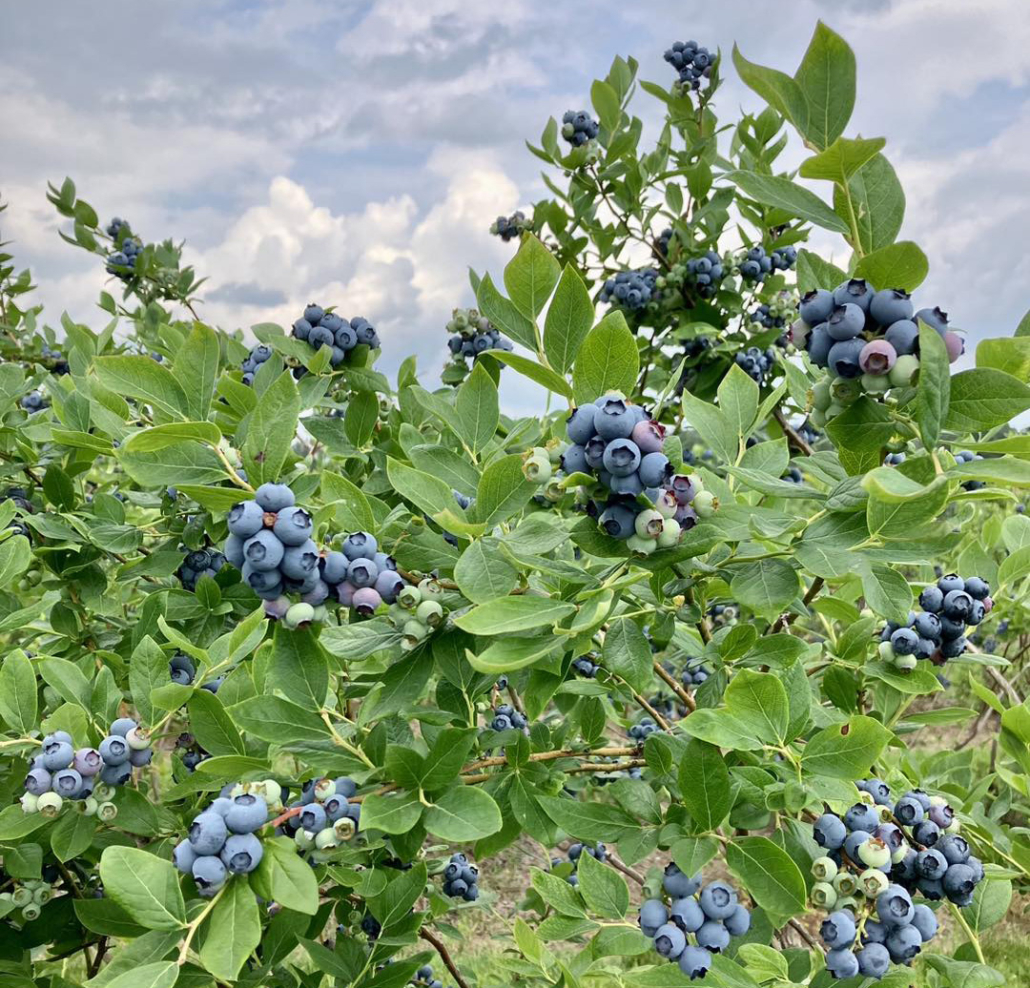
Many recognize blueberries packaged in their clear plastic containers, just to the left of the raspberries and blackberries in the produce section. Yet, the history of blueberries extends beyond the checkout counter and even beyond the lowland shrubs that they were harvested from. An even deeper look at their past reveals them as much more than just a soury-sweet snack to eat raw once they are brought home from the grocery store. Indeed, the historical harvesting and means of processing blueberries within indigenous cultures, before colonization, is rich with unique methods for getting the most out of surrounding land.
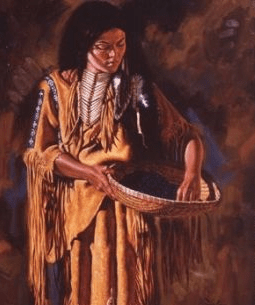
A widespread belief about blueberry history claims that harvesting began when a farmer’s daughter: Elizabeth White, saw their similarity to cranberries and partnered with USDA botanist, Frederick Coville, to begin planting them in a field during the turn of the 20th century. However, natives who lived in coastal regions came across these berries far before the early 1900’s as, “Their stands spread on well-drained, highly acidic soil, only reaching about a foot in height. Blueberry barrens, rolling areas of sandy soil (usually treeless) along the foggy coastline, were first created naturally, then maintained by Native Americans.” (Native Fruit: The Wild Blueberry, Blakely). The endurance of blueberries made them a favorable food source among various native tribes. One method of maintaining these blueberry shrubs was the use of cool burns, which are short-lasting fires that remain at ground level. The exact or even approximate origin of native harvesting and cultivation of blueberries is unknown, but similar fruits, such as raspberries and blackberries, “were available and could have been used by native peoples of the region as far back as 11,000 B.P,” (Manna in Winter: Indigenous Americans, Huckleberries, and Blueberries, Hummer). Prior to discovery by European explorers, native horticulture of blueberries is inferred, although evidence is undocumented until their arrival.
From Lewis and Clark to John Josselyn, documentation of indigenous peoples cultivating blueberries is plentiful. In the year of 1615, along Lake Huron, “Champlain observed a gathering of Algonquin women as they dried “blues” in the sun. He noted that they prepared a kind of bread made of pounded, sifted cornmeal, mixed with boiled, mashed beans, and then added the dried blueberries,” (Manna in Winter: Indigenous Americans, Huckleberries, and Blueberries, Hummer). Did blueberries really make meals taste better? Absolutely! Before they were heavily domesticated, blueberries were much smaller and sweeter than the plump, juicy varieties commercially sold today. One of the most well known native foods made with blueberries is “sautauthig,” which is made, “by drying blueberries before beating them and combining them with honey, cornmeal and water to make a pudding, (A History of Blueberries, James Bay Wild Fruit Business). Native Americans also sun-dried blueberries before adding them into soups and stews. At other times, blueberries were boiled first to allow them to be shaped into cakes, sometimes with dried fish or meat to form pemmican, where the berries helped to preserve the animal. Adversely, sometimes the preparation process would end with boiling, creating a more simple blueberry tea that was used, “as a relaxant during childbirth. Early medical books show this same tea was used by wives of settlers during labor,” (A History of Blueberries, James Bay Wild Fruit Business). Tea was also produced from the blueberry leaves and stems, creating a tonic believed to purify blood, while blueberry juice was even known to help with long-lasting coughs and colic in infants. Additionally, in the 1700s, natives along the East coast were observed adding blueberries into milk to soothe stomach troubles. So, all parts of blueberry plants benefited the health of native people of all ages, who prepared them by drying, pounding, and boiling to create both meals and drinks.
Although to many indigenous groups, blueberries were regarded as much more than just a flavorful addition to meals or even a medicinal plant. In fact, natives were said to refer to them as “star berries,” due to the five-pointed calyx of the berry. First Nations also didn’t believe that these bushes grew naturally, but rather, “The Great Spirit was said to have sent “star berries” to ease the children’s hunger during a famine,” (Blueberries, TSU). Appreciation for blueberries extends past their hunger and health benefits and into spiritual territory within former communities.
Today, collaborative efforts among, “Native American tribes, including the Micmac and Passamaquoddy tribes, working with government and private agencies, still maintain blueberry barrens, preserving this significant element of the rocky, coastal landscape.” (Native Fruit: The Wild Blueberry, Blakely). The implementation of “Traditional Ecological Knowledge” within modern blueberry cultivation would not only establish the accurate history of this berry, but also reintroduce the health benefits which aided natives long before blueberries were ever farmed using Anglo-American standards.
Sources Cited:
Blakely, J., Glattstein, J., & Elgert, S. (2018, November 13). Native fruit: The wild blueberry. Smithsonian Libraries and Archives / Unbound. https://blog.library.si.edu/blog/2018/11/13/native-fruit-the-wild-blueberry/
Hummer, K. E. (2013, April 1). Manna in winter: Indigenous Americans, huckleberries, and blueberries. HortScience. https://journals.ashs.org/hortsci/view/journals/hortsci/48/4/article-p413.xml#T1
Kretzje. (2016, May 7). BLUEBERRY: the North American Native Wonderberry. Mu Retail Food Service. https://blogs.oregonstate.edu/mufood/2016/05/07/blueberry-the-north-american-native-wonderberry/
Poulin, M. (n.d.). A History of Blueberries. Wild blueberries – history of wild blueberries. https://www.wildblueberries.net/bluehistory.html
TSU. (2015, June 26). Blueberries. Farmer’s Market Fresh.U.S. Highbush Blueberry Council. (2021, August 4). History of blueberries. Blueberry.org. https://blueberry.org/about-blueberries/history-of-blueberries/#:~:text=Our%20favorite%20boost%20of%20blue,in%20North%20America%20each%20year.
Cover Image found on https://attra.ncat.org/publication/blueberries-organic-production/
Page Image found on http://gourmetpedia.net/products/articles/blueberry-native-indians/
Discover more from The Home of Cottagecore
Subscribe to get the latest posts sent to your email.
 The Home of Cottagecore